Spirit of the Olympics Ignites Wellington: Youth Day Games Champion Hope
Under a crisp winter sky on Tuesday, June 16, the streets of Wellington came alive with the vibrant colors, rhythmic sounds, and unyielding spirit of local youth. Marking exactly 50 years since the historic 1976 uprisings, the Drakenstein community gathered not just to look back at history, but to actively confront the contemporary crises plaguing their neighborhoods. The medium for this vital intervention was the Winelands Community Youth Games. This ambitious initiative accepted the grand vision of the Olympics, bringing grassroots sports and cultural unity directly to the youth of the Winelands.
The day’s proceedings kicked off with a striking visual display in Church Street. Organizers, participants, and locals congregated for a lively, high-energy street parade. Moving with a shared sense of pride and purpose, the procession marched to the Cape Peninsula University of Technology (CPUT) Sports Grounds, effectively transforming the town’s main thoroughfare into a celebration of youth solidarity.
Setting the Stage: Morning Disciplinary Displays
Upon reaching the CPUT Sports Grounds, the young attendees were welcomed by a structured program formulated to prepare both the mind and body. Before the official sports matches kicked off, the morning featured high-impact, motivational demonstrations aimed at showcasing discipline, safety, and physical mastery.
With the crowd energized, head organizer Henry Jacobs officially opened the proceedings, welcoming a diverse crowd of spectators, community leaders, and anxious youths. Embracing the foundational values of community protection and spiritual resilience, Henrico Delport, the spiritual desk leader of the Wellington Community Police Forum, opened the event with a powerful prayer.
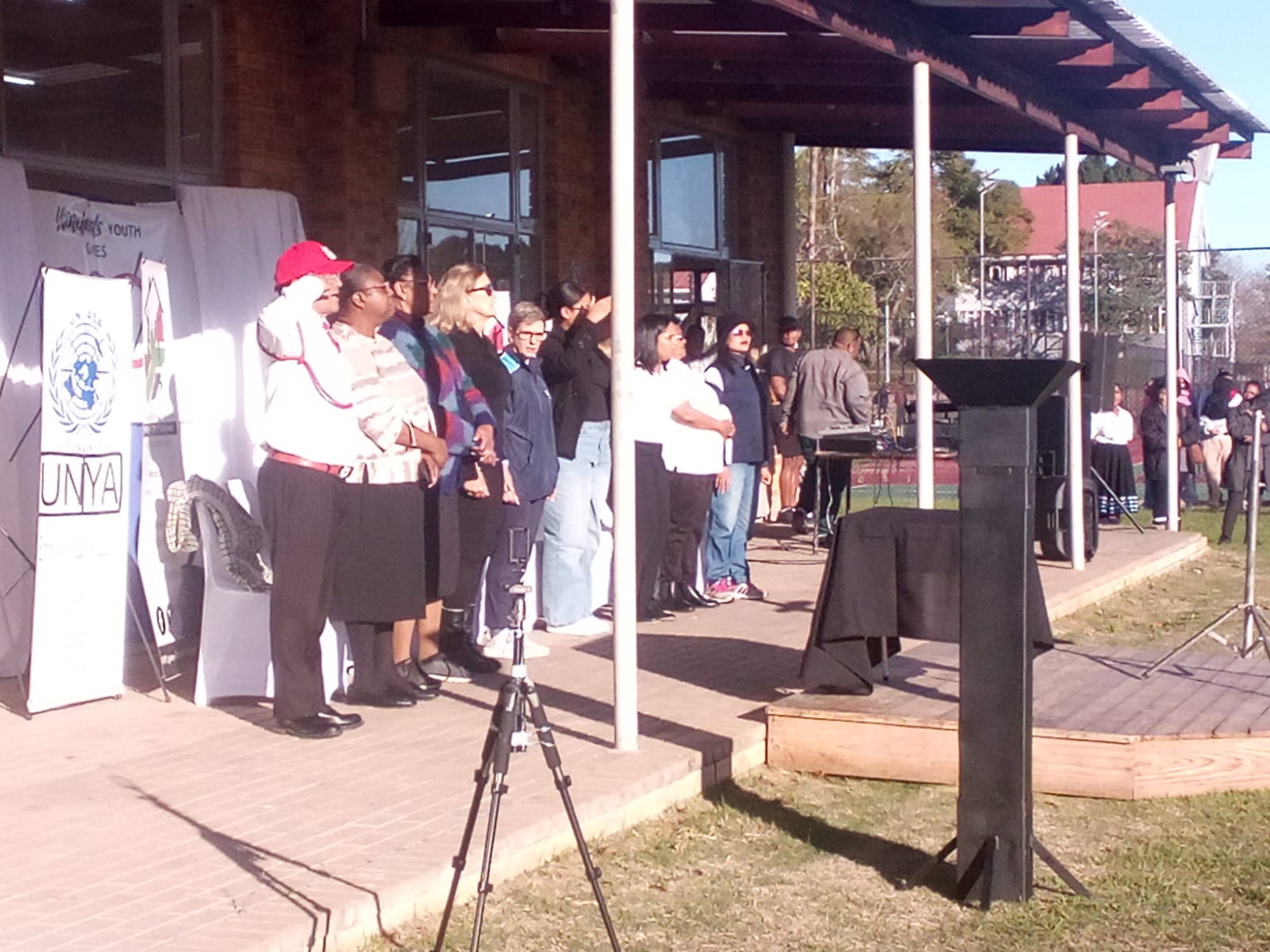
Honorary guests standing on attention for the national anthem.
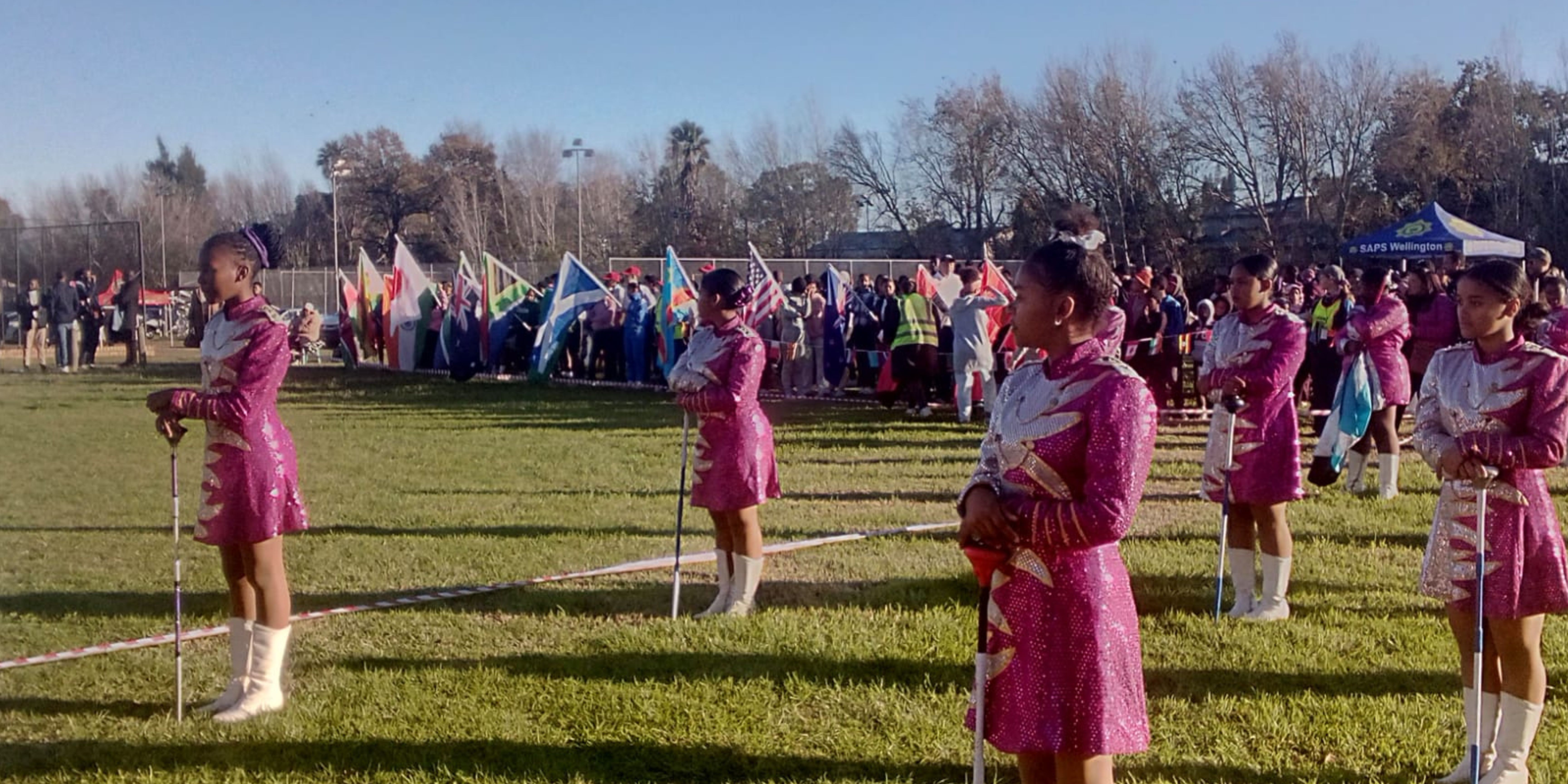
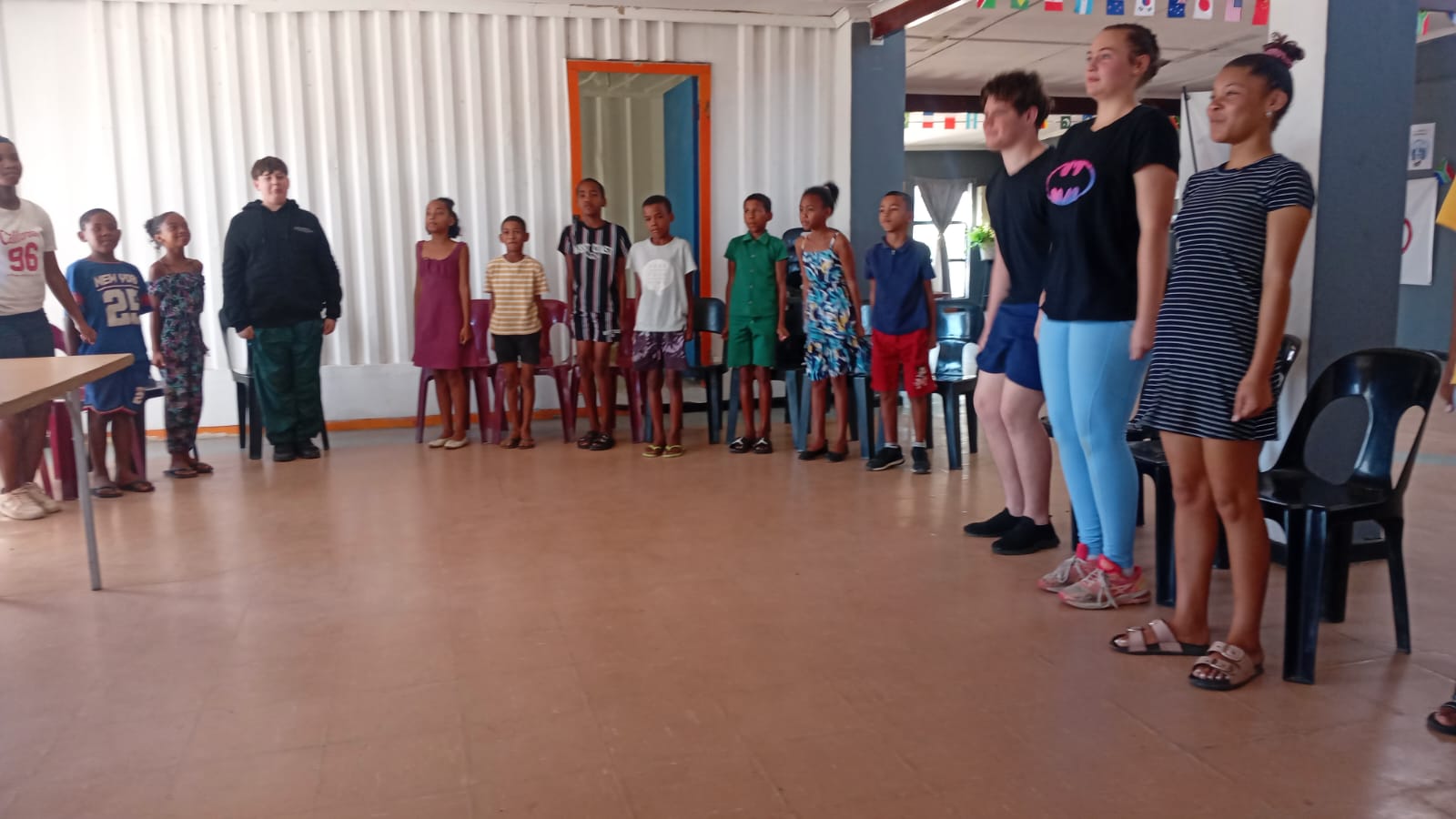
Following the invocation, the notes of the national anthem echoed across the facility. On the field, children queued in structured formations, holding flags that represented various nations. It was a deliberate, moving emulation of the Olympic Games, designed to instill a sense of global belonging and higher purpose in children who often see their horizons limited by structural poverty. The Ebenezer Senior Drum Majorettes followed under the leadership of Camile Cupido, who put up an eventful, highly disciplined performance.
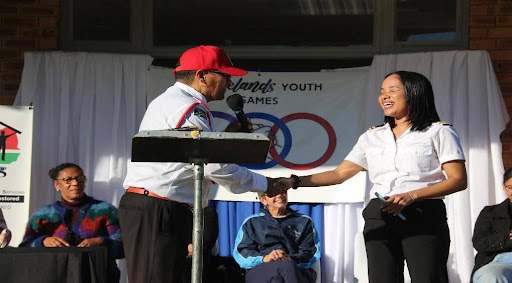
The keynote speaker of the day, Summer-Joy Hendricks, delivered a deeply refreshing and motivating account of her life. As a private pilot currently pursuing her commercial license, Hendricks used her own trailblazing journey in aviation to urge the young audience to look beyond their immediate surroundings and fiercely follow their dreams.
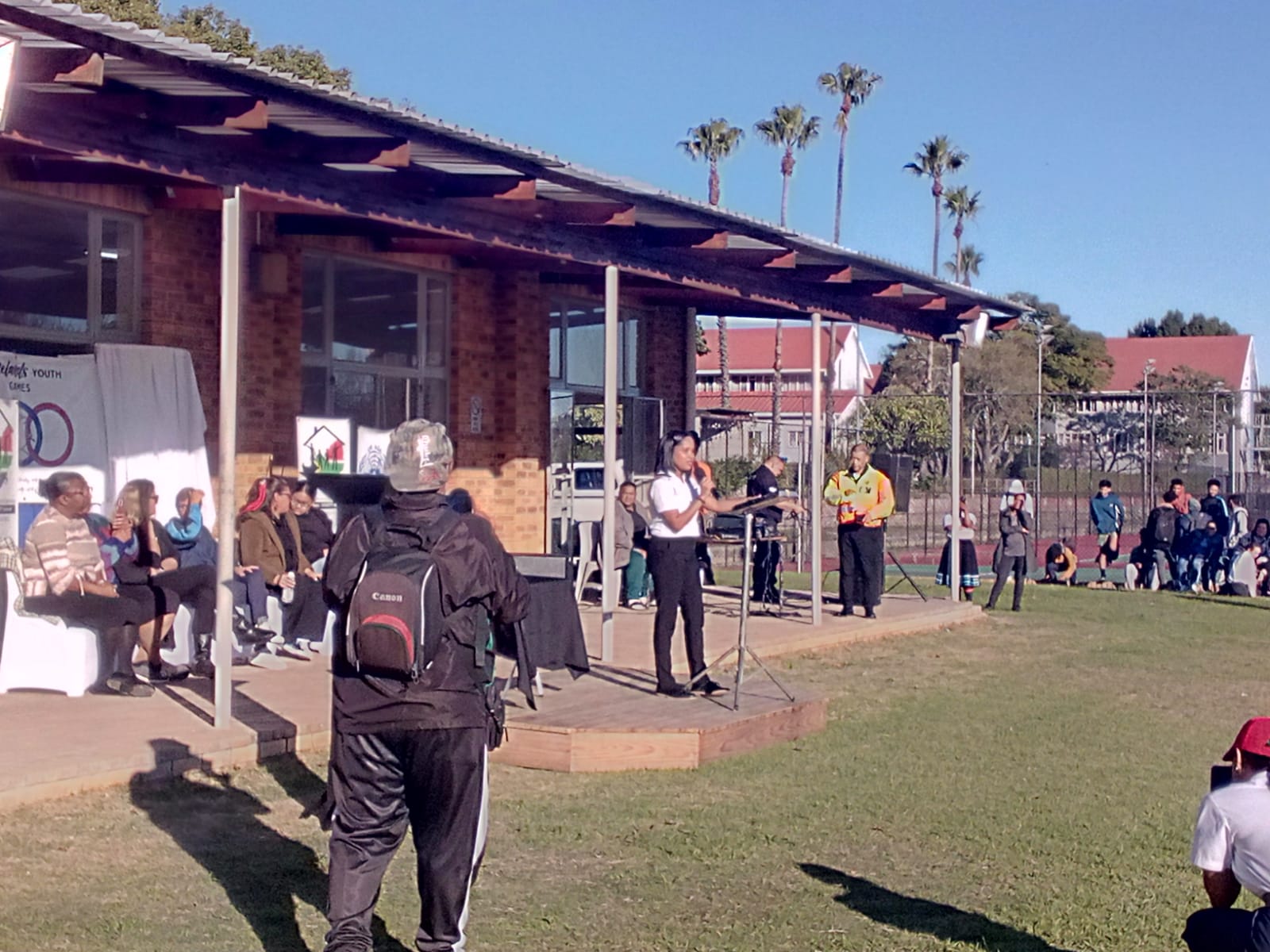
Summer-Joy Hendricks delivering an inspirational speech
The K9 Boland Paarl Police Dog Unit—led by Jean Williams, Collin Booysen, and Marius Herbert—took to the field. They put up a flawless, well-prepared performance, ensuring the security demonstration was both thrilling and entirely safe for the families in attendance. Immediately following the K9 unit, the Yuki Dojo karate club took center stage. Under the guidance of chief instructor John Solomon, the young martial artists put up a brave, highly precise display of their karate skills, setting a standard of focus and restraint for the day ahead.
Cultural Heritage and Severe Municipal Backlash
The cultural fabric of the region took center stage shortly after the speeches. The Boland Rieldansers, whose foot-stomping display signified the rich cultural heritage of the Khoe and San people, historically designated as the so-called coloured people of South Africa.
The Rieldansers’ beautiful performance was cheered on by guests of honour, including Hanlie Dippenaar, representing CPUT Wellington, and Doreen Carolissen, a district municipality councilor. Carolissen did not mince her words regarding the political landscape surrounding the event:
"The event was bigger last year, but I was really impressed with the Riel Dansers today," Carolissen shared. "I have been working in the community for over 30 years, and even though I am in politics, when it comes to the youth games, I am for the community and happy to get my hands dirty. I believe Drakenstein municipality could have done better to support the event."
This sentiment of political abandonment was explicitly blown wide open by the head organizer, Henry Jacobs. Jacobs revealed the stark logistical and financial hurdles the team faced behind the scenes, casting a harsh spotlight on local government.
"Last year's event was held at the amphitheater," Jacobs explained. "The reason for shifting to the CPUT Sports Ground this year revolves around strict safety precautions and the intentional inclusion of the farming community. It is our core objective to introduce various communities to each other and build bridges through the Winelands Community Youth Games. Through these games, we aim to directly address gang activity and how it negatively impacts our youth, by giving young people a tangible alternative and celebrating their successes."
Jacobs then leveled a damning accusation at local authorities: "It is clear that Drakenstein Municipality does not see the need to support our initiative. Drakenstein Municipality did not contribute any funding support in an effort to make this event an even greater success."
Instead of municipal backing, Jacobs noted that grassroots solidarity and private citizens saved the event entirely. The Wellington Community Police Forum, Durr Bottelering, and Kookwater stepped in as vital sponsors. Wellington Athletics contributed R1,000 specifically for the sound system, while CPUT generously made their fields and facilities available, even providing student volunteers on the day. Security was fortified pro bono by PACRS Security, with the Weltevrede Neighborhood Watch providing an extra layer of safety.
The Main Tournament and an Urgent Warning from Elders
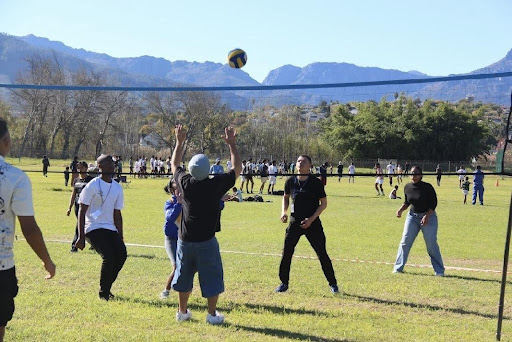
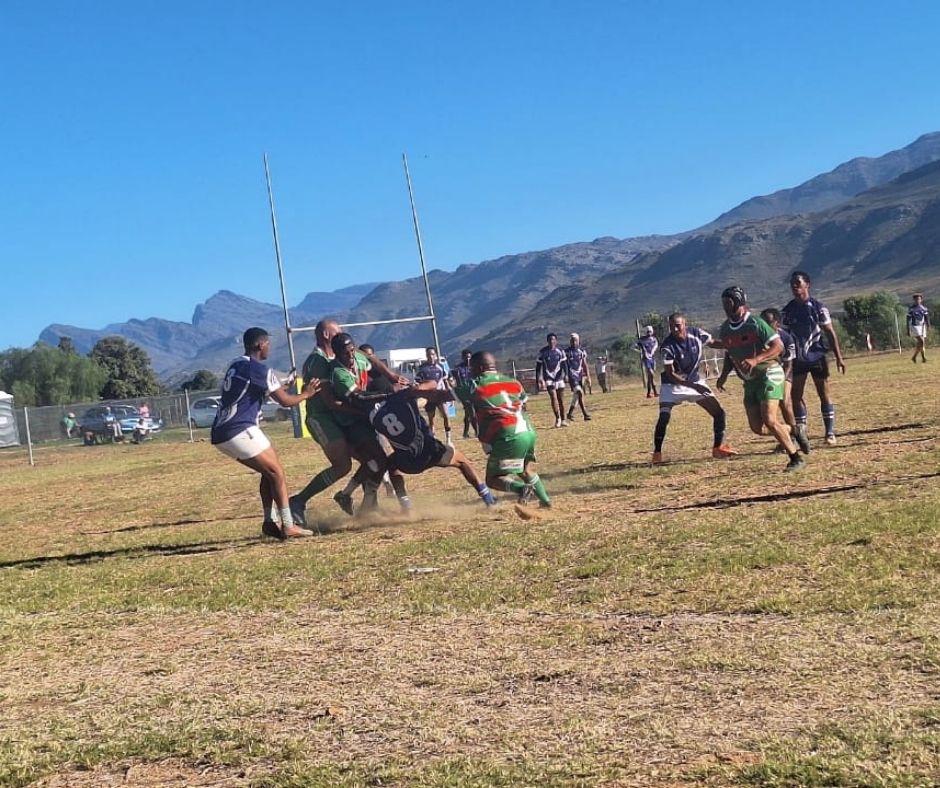
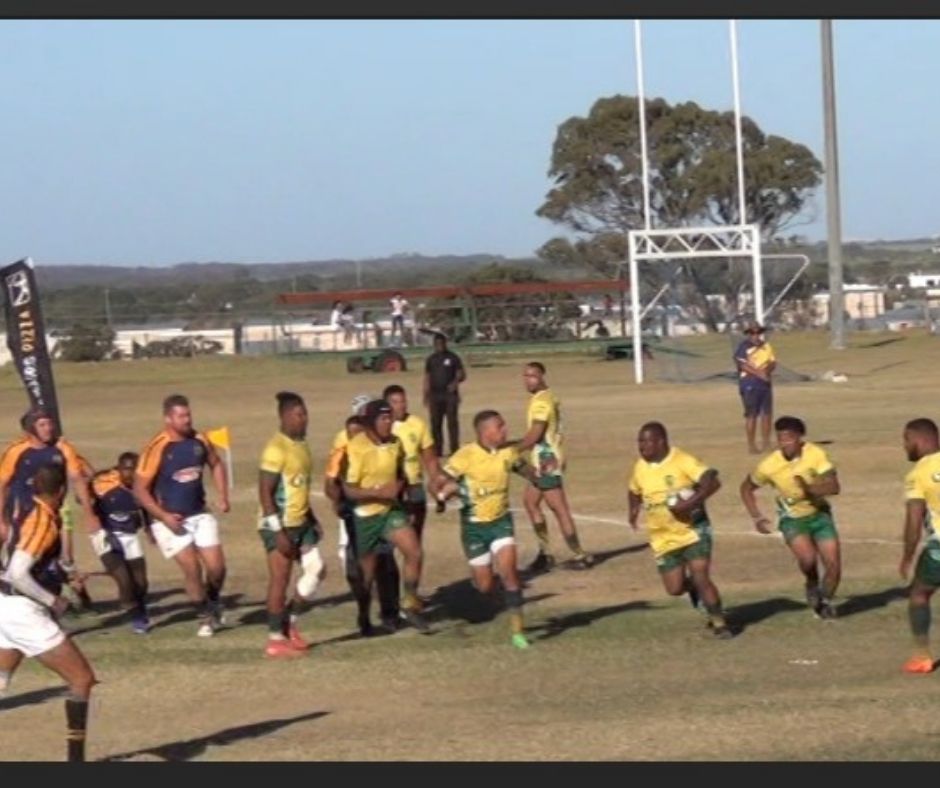
Following the morning formalities and cultural displays, the sports officially kicked off. The main tournament structure saw local youth split into highly competitive categories across five core disciplines: Touch Rugby, Soccer, Netball, Volleyball, and traditional Folk Games. The inclusion of Folk Games served as a vital bridge to indigenous heritage, ensuring that physical play remained grounded in cultural history.
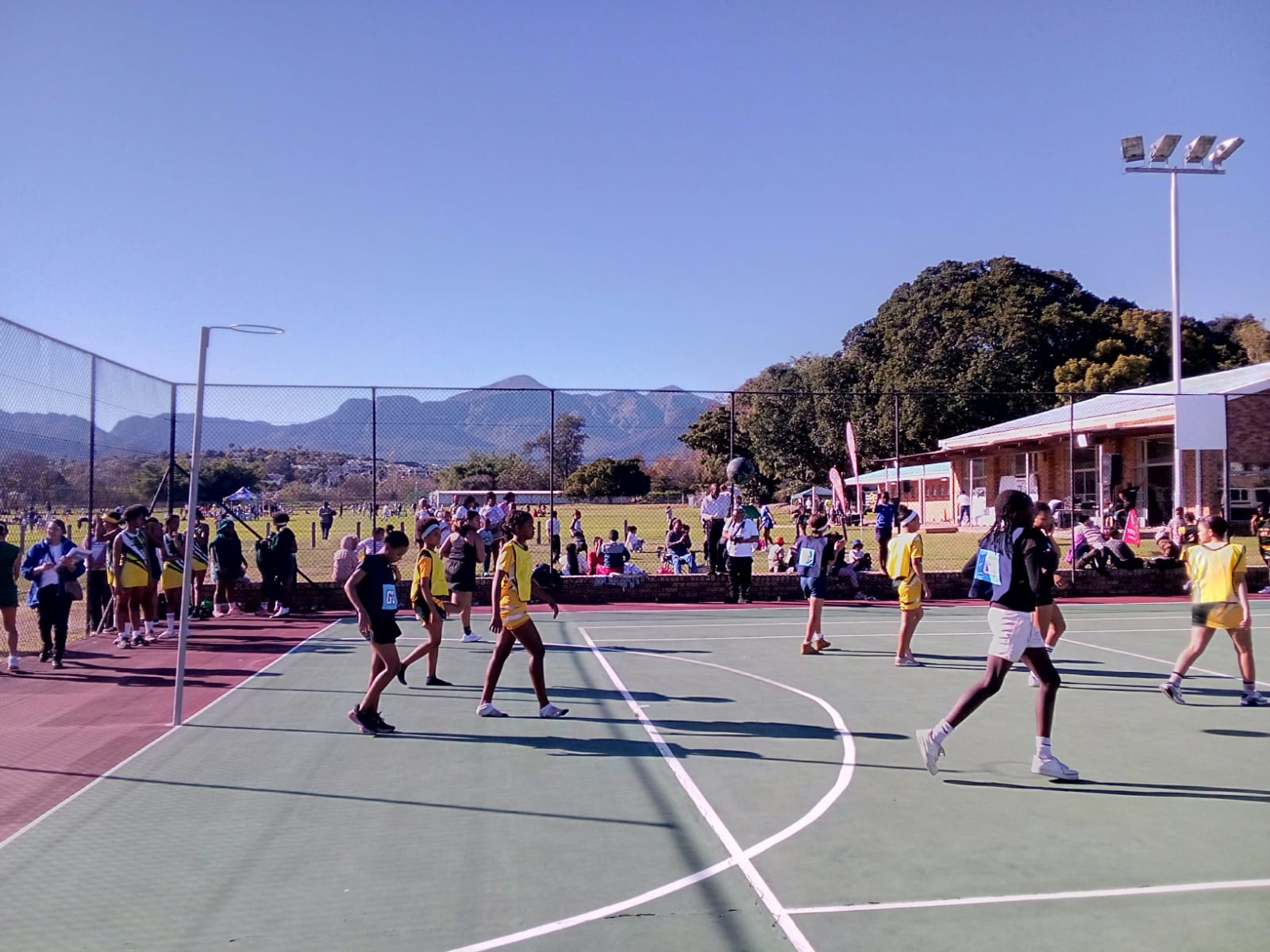
The event successfully bridged generational gaps by hosting members of the Wilgerbome Club, an elderly group invited as honored guests. Previously led by Christine Victor and now under the leadership of Juna Du Plessis, the elders brought both physical support—in the form of their own community, youth rugby and netball teams—and a sobering warning.
"We are thankful for the contribution and teamwork of all involved," Christine Victor stated. "However, we remain highly concerned about young people being caught up in drugs and alcohol abuse, especially starting from a very young age. As elders, we advocate that the community of Wellington must come together to put a stop to the negative things that are hurting our young people."
Juna Du Plessis strongly affirmed Victor's words, adding a critical plea for structural inclusivity: "Children with disabilities must be included in all aspects of life. When it comes to the youth games, I sincerely hope that will be the case going forward."
A Golden Finish and Looking to Paarl
As the intense sporting matches drew to a close late in the afternoon, the field transformed once more for the final segment of the program. In true Olympic fashion, a formal closing ceremony was held where medals were handed out to the victors of each sporting category. The gleam of the medals brought a triumphant close to an exhausting day of competition, putting tangible rewards in the hands of young people whose hard work was publicly validated.
Despite the lack of state funding, the organizers are already looking toward an expansive future. Jacobs concluded with a bold vision for the next iteration of the games.
"Our ultimate aim is to move this event to Dal Josaphat in Paarl," Jacobs revealed. "We want to utilize that massive space to bring the Winelands Community Youth Games to an even greater stage—one that is properly set for a true mini-Olympics."

.gif)