Fake Skincare Trade Raises Concerns over Consumer Safety in South Africa
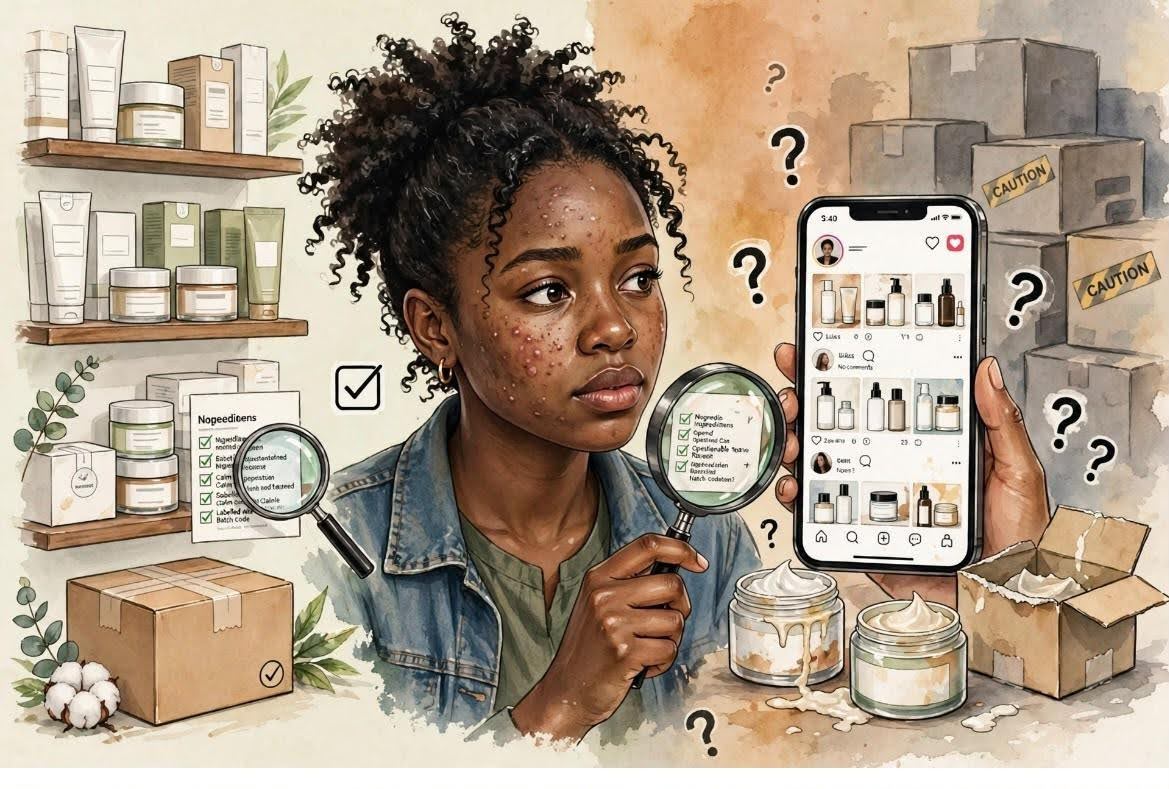
South Africa’s illicit cosmetics and personal care market is estimated at R2.3 billion a year, raising concerns about the products consumers buy and the risks of purchasing from sellers whose supply chains are unclear.
A report by the Consumer Goods Council of South Africa and economic consultancy Econometrix, published in September, estimated that illicit trade accounts for 4.5% of the domestic cosmetics and personal care market, valued at R50.7 billion.
The findings come as consumers increasingly encounter beauty and skincare products through online platforms and social media, where it may be difficult to establish a product’s origin or verify a seller.
Why consumers are cautious
Khumbuzile Kantso said she usually buys skincare products from established retailers rather than social media sellers.
“I usually buy my skincare products at Clicks or Dis Chem. It depends on the product, its price or where I can find it,” she said.
Asked whether she felt safer buying from these retailers, she said: “Yes, I do feel safer getting my skincare products from these stores because I trust them more when it comes to authenticity and quality.”
Khumbuzile said she would not buy skincare products from social media sellers because she has acne-prone skin.
“Honestly, no. I have acne-prone skin, so I'm very careful about the products I use. I prefer buying products recommended by my dermatologist because I want to make sure they're suitable for my skin and less likely to cause irritation or breakouts,” she said.
However, she cautioned against assuming all products sold through social media are unsafe.
“I am not saying all skincare products from social media sellers are unsafe, however it is very important to make sure that the seller is verified and the products from that seller are from a trusted and authentic source,” she said.
What should consumers check?
Afrakari, a skincare business, advised consumers to check product information, including batch codes, manufacturer details and ingredient information. It recommends buying directly from reputable brands or authorised sellers where possible.
The company said it sells directly to consumers in South Africa and does not have direct experience investigating counterfeit products. It added that reputable businesses should prioritise consistent product quality, ingredient sourcing, testing and raw-material traceability.
In September, police also seized more than 10,000 counterfeit items, including cosmetics, during an operation in Marabastad, Gauteng, according to SAnews.
The National Consumer Commission and the South African Health Products Regulatory Authority were approached for comment but had not responded by the time of publication.
Consumers should be cautious when sellers cannot provide reliable information about a product’s origin. If a product causes a reaction, they should stop using it and seek medical advice when necessary.






.gif)