Matric 2026: Beyond the pass rate, learners face family hopes and future fears
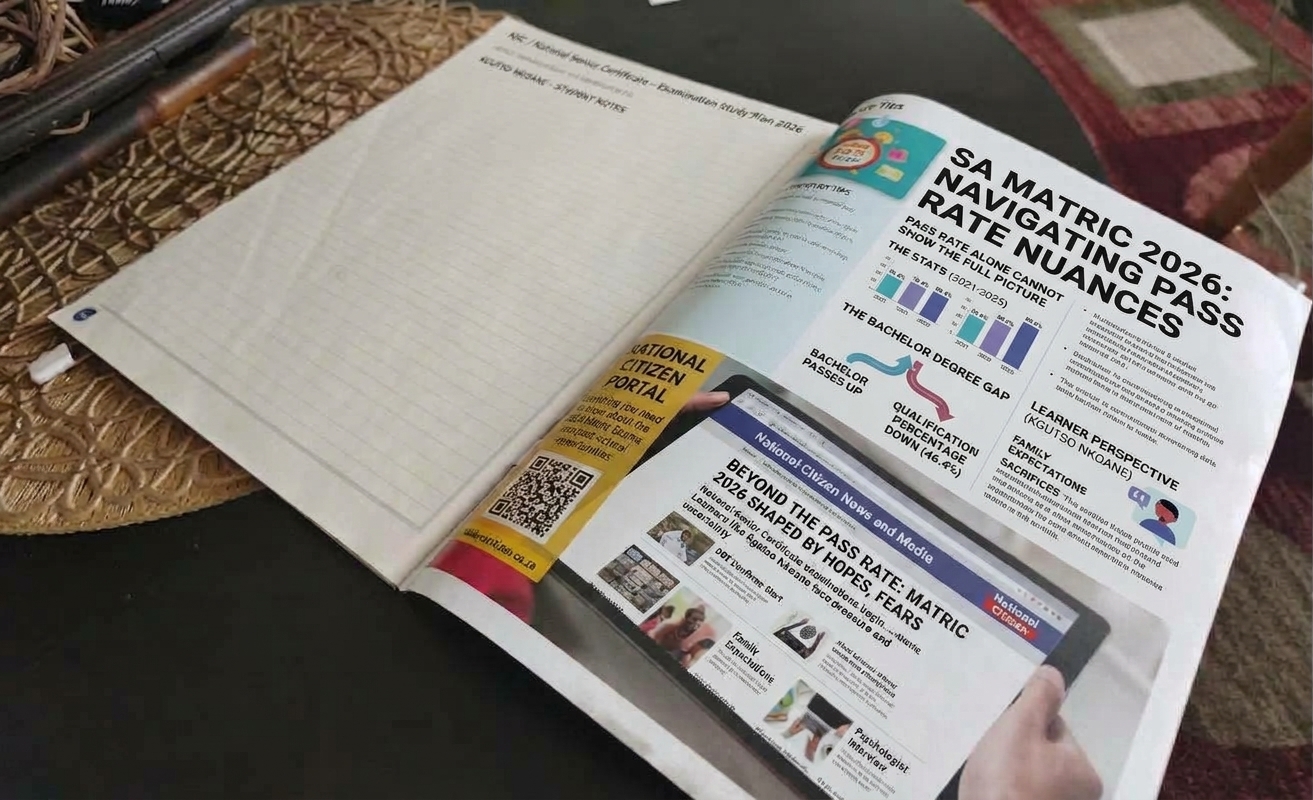
Matric is far more than a final year of schooling; it is a pressure cooker shaped by family sacrifices, high expectations, and the daunting uncertainty of what lies beyond the school gates.
As South Africa’s 2026 National Senior Certificate (NSC) examinations officially kick off today, Tuesday, 13 October, hundreds of thousands of candidates are stepping into exam halls. But while the Department of Basic Education (DBE) routinely celebrates record-breaking pass rates, the numbers only tell half the story.
For matric candidate Kgutso Nkoane, this exam season represents a major family milestone. Both of his parents completed matric but were unable to finish their university degrees. As their firstborn, the weight of carrying the torch falls heavily on his shoulders.
"My parents both did their matric, but they didn't finish university," Nkoane says. "So reaching matric is almost like getting close to where they left off—and taking it further."
The journey hasn't been smooth sailing. A head boy and sailing captain, Nkoane found himself forced to make tough sacrifices, stepping back from extracurriculars to safeguard his academic standing. Despite his efforts, maintaining the high Grade 11 marks that secured his preliminary university applications proved grueling.
"It almost broke me at some point," Nkoane admits, reflecting on how the year tested his confidence and faith.
To cope with the burnout and mental toll, he turned to daily prayer, writing music, taking long walks, and leaning on his inner circle. His mother stepped in to navigate university application portals, his father ensured financial and daily essentials were met, while teachers provided crucial extra lessons and online tools.
Nkoane’s struggle is far from unique. Clinical psychologist Evelyn Nagel notes that family expectations, social pressure, and intense competition for limited university spots are key drivers of severe anxiety among South African matriculants.
The Stats vs. The Reality
On paper, South Africa’s matric story looks like a triumph. DBE records show a steady upward trajectory in the national pass rate over the last five years:
-
2021: 76.4% (537,687 of 704,021 passed)
-
2022: 80.1% (580,555 of 725,146 passed)
-
2023: 82.9% (572,983 of 691,160 passed)
-
2024: 87.3% (615,429 of 705,291 passed)
-
2025: 88.0% (656,415 of 746,110 passed)
Bachelor degree passes have similarly surged, climbing from 256,031 in 2021 to 345,875 in 2025.
However, educational experts warn against looking at pass rates in isolation. A closer inspection reveals troubling nuances: while total bachelor passes grew, the actual percentage of candidates writing who qualified for bachelor's studies dipped from 47.8% in 2024 to 46.4% in 2025.
More critically, a passing grade does not guarantee a university spot or equal access to a post-school economy burdened by high youth unemployment. High pass rates mask systemic disparities between well-resourced urban schools and struggling rural classrooms.
For Nkoane, however, the real measure of this year isn't just found in a percentage or a report card—it's in the resilience built along the way.
"You can always get rewrites, but you're never going to be in matric ever again," he says







.gif)